
Water Heater Repair or Replace? A Victoria, TX Homeowner’s Guide
By Pipifix Plumbing TeamReviewed by a licensed master plumberPublished October 2026
A water heater rarely fails at a convenient time. It usually quits on a cold morning, or starts leaking while you are at work. The real question is whether it is worth fixing or time to replace it. This guide helps Victoria homeowners decide, with clear signs, honest rules of thumb and the habits that make a water heater last.
- Repair a heater that is under about 8 years old with a small, fixable fault such as a thermostat, heating element or pilot problem.
- Replace a heater with a leaking tank, or one past 10 to 12 years old that needs a major repair.
- If the repair costs about half the price of a new unit or more, replacing is usually the smarter spend.
1Start with the age of your heater
Age is the first fact a plumber will look for, and you can find it yourself in a minute. Check the rating label on the side of the tank. The serial number usually encodes the month and year it was made, and the manufacturer’s website can decode it if the label is unclear.
As a general guide, a traditional tank water heater lasts about 8 to 12 years, and a tankless unit can last around 20 years with regular care. These are averages, not promises. A well-maintained 11-year-old tank can outlast a neglected 7-year-old one, but the older the unit, the more it makes sense to think about replacement before it fails.
2Six warning signs to take seriously
No hot water, or only lukewarm water
This is often a failed heating element or thermostat on an electric heater, or a pilot light or gas control problem on a gas heater. It is also the most repairable symptom, especially on a younger unit.
Rumbling, popping or banging from the tank
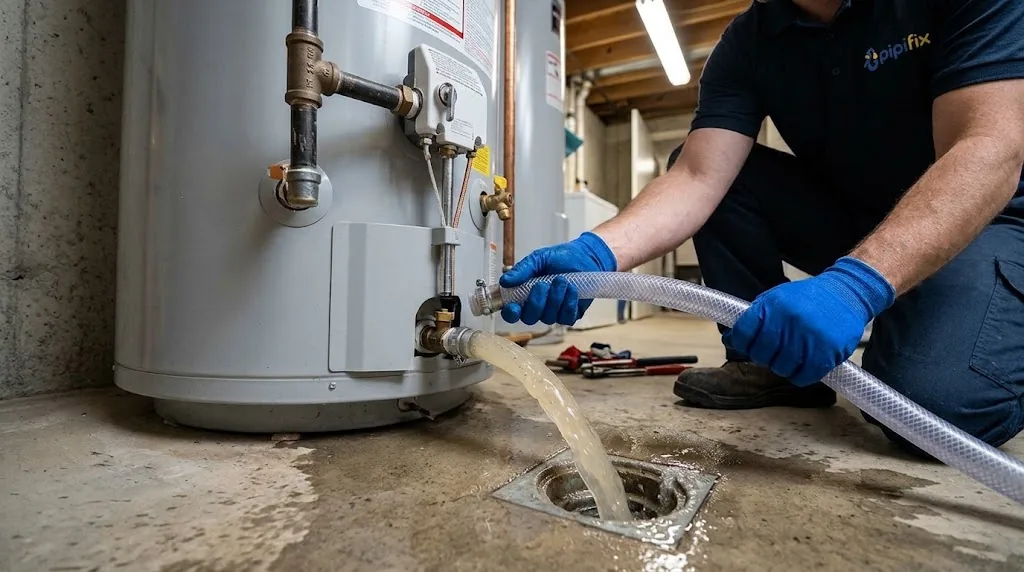
Those noises usually come from sediment at the bottom of the tank. Water trapped under the sediment boils and bubbles up through it. The layer also forces the heater to work harder and run longer, which wears it out faster.
Rusty or discolored hot water
If rust-colored water comes only from the hot taps, the inside of the tank may be corroding. If it comes from the cold taps too, the cause is more likely your pipes. A plumber can tell you which one you have.
Water around the base of the tank
A small puddle can come from a loose fitting or a faulty relief valve, which are repairable. A leak from the tank itself cannot be repaired, because the steel shell has failed. Treat this one as urgent. See emergency plumbing if water is spreading.
Hot water that smells like rotten eggs
A sulfur smell in hot water often points to bacteria reacting inside the tank, sometimes linked to the anode rod. It can often be corrected with service, but it is worth having checked.
Higher energy bills with no change in habits
A heater buried in sediment or scale loses efficiency. If your bills climb and your hot water use has not changed, the heater may be telling you something.
3Why local conditions matter in Victoria
Water heaters in the Crossroads region face a few conditions that shorten their lives if nobody pays attention.
- Hard water and scale. Mineral buildup is a common complaint across South Texas, and local water treatment providers list hard water among the usual problems in Victoria. Minerals settle as sediment in the tank and coat heating elements, which makes both work harder. A water softener can reduce this buildup throughout your home.
- Garage and closet installations. Many Texas homes put the heater in a garage, attic or utility closet. A slow leak can go unnoticed for weeks in those spaces.
- Heat. Hot, humid summers are tough on equipment, venting and the spaces where heaters sit. Good ventilation and a clear area around the unit matter.
- Storm season. Flooding and power interruptions can affect water heaters, which is covered in the section on storms below.
4Repair or replace: how to decide
Use this table as a starting point. A plumber who inspects your unit can confirm the right call.
| Situation | Usually best move | Why |
|---|---|---|
| Under 8 years old, minor fault | Repair | Parts like thermostats, elements and valves are inexpensive and the tank still has years left. |
| 10 to 12 years old, needs a major repair | Replace | Money spent on an aging tank buys little extra life, and other parts are likely to follow. |
| Water leaking from the tank itself | Replace | A failed tank shell cannot be repaired. |
| Repair cost is about half the price of a new unit | Replace | A new heater comes with a warranty and better efficiency. |
| Rumbling and rising bills, but no leak | Service first | Flushing and a check of the anode rod may restore performance. |
| Rusty hot water and an older tank | Replace | Internal corrosion is usually a sign the tank is near the end. |
Rule of thumb: if the unit is past the middle of its expected life and the repair is not cheap, put that money toward a new heater instead. Always ask for a written quote for both options before you decide.
5Common repairs and what they involve
- Electric heaters: replacing a heating element or thermostat, or resetting a tripped high-limit switch.
- Gas heaters: cleaning or replacing a thermocouple, relighting a pilot, or replacing a faulty gas control valve.
- Both types: replacing a temperature and pressure relief valve, swapping a worn anode rod, and flushing out sediment.
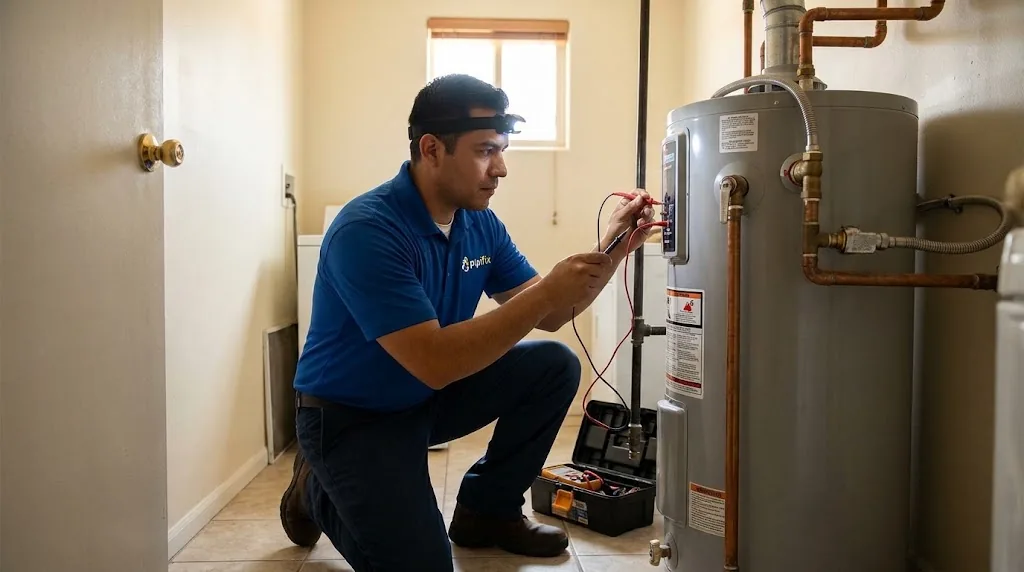
Safety first. Gas and electrical work on a water heater should be left to a licensed plumber or technician. If you smell gas, leave the house and call your gas utility or emergency services from outside. Do not turn on lights or appliances.
Our water heater repair service covers these problems, with a written quote before any work starts.
6Tank or tankless?
If you are replacing, you will have to choose between the two designs.
| Factor | Tank heater | Tankless heater |
|---|---|---|
| Upfront cost | Lower | Higher |
| Typical lifespan | About 8 to 12 years | Often around 20 years with care |
| Hot water supply | Limited by tank size | Continuous while demand stays within its capacity |
| Space | Needs floor space | Compact, wall mounted |
| Hard water impact | Sediment builds in the tank | Scale builds in the heat exchanger, so descaling is needed |
Larger households and homes with several bathrooms often benefit from a tankless unit. Smaller households on a tight budget are often well served by a good tank heater. Either way, treating the water supply matters in this area.
7How to make a water heater last longer
- Flush the tank once a year to remove sediment. Have a plumber do it if the drain valve is old or stiff.
- Have the anode rod inspected every few years and replaced when it is mostly consumed.
- Ask a plumber to test the temperature and pressure relief valve during a service visit.
- Set the thermostat around 120°F to save energy and reduce scald risk.
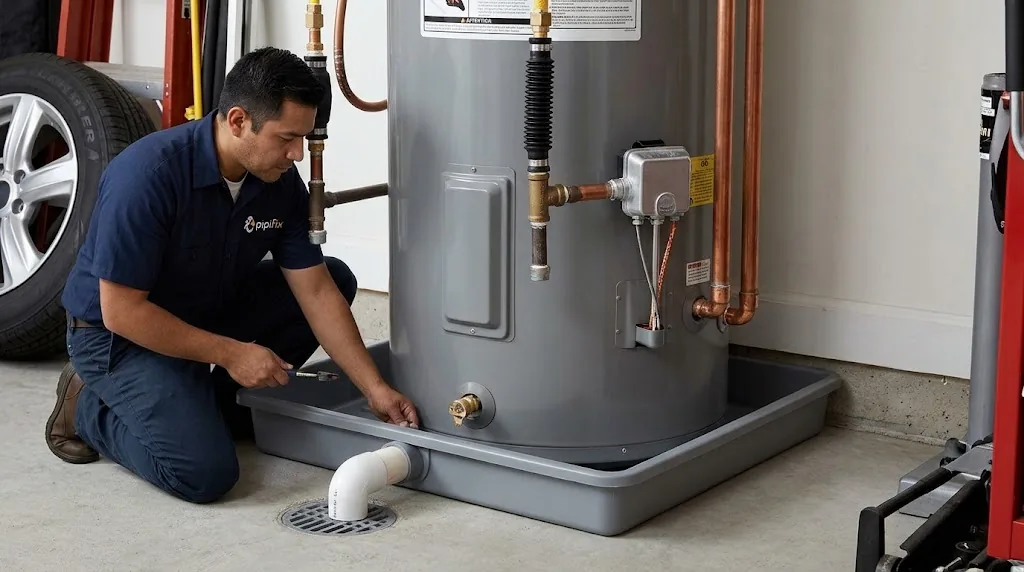
- Install a drain pan with a drain line if your heater sits indoors or in a garage.
- Add a water softener if hard water is a problem in your home.
8After a storm or flood
If floodwater reached your water heater, do not simply switch it back on. Water can damage gas controls, burners and electrical parts in ways you cannot see. Have a licensed plumber inspect the unit before using it again, and expect that some components, or the whole heater, may need replacing. If water is leaking or you smell gas, treat it as an emergency.
Frequently asked questions
How do I know if my water heater needs repair or replacement?
Look at its age, whether the tank is leaking, and what the repair would cost. A leaking tank means replacement. A younger heater with a small fault is usually worth repairing.
How long does a water heater last in Texas?
A tank heater typically lasts about 8 to 12 years, and hard water or poor maintenance can shorten that. Tankless units often last longer, especially when they are descaled regularly.
Is it normal for a water heater to make noise?
Occasional ticking as metal expands is normal. Loud rumbling, popping or banging usually points to sediment and is a sign the tank needs service.
Can I flush my water heater myself?
Many homeowners do, but an old or stiff drain valve can clog or leak when opened. If you are unsure, have a plumber do it as part of a maintenance visit.
Does a water softener help my water heater?
Yes, in areas with hard water it reduces the mineral buildup that coats elements and settles in the tank, which helps the heater work more efficiently.
Water heater acting up?
Pipifix repairs and replaces water heaters across Victoria and nearby communities. Get an honest recommendation and a clear written quote.