
High Water Bill in Victoria, TX? How to Check for a Hidden Leak
By Pipifix Plumbing TeamReviewed by a licensed master plumberPublished October 2026
You open the water bill and the number makes no sense. Nobody changed their habits, nobody filled a pool, and yet the total keeps climbing. A hidden leak is one of the most common reasons. This guide shows Victoria homeowners how to confirm it in about 15 minutes, where leaks usually hide, and when to call a plumber.
- Compare your last 3 to 6 bills. A sudden jump with the same household and watering habits points to a leak.
- Turn off every tap and appliance, then watch your water meter. If it keeps moving, water is escaping somewhere.
- Check toilets first, since silent toilet leaks are the most common culprit and the cheapest to fix.
- If the meter moves and nothing visible is leaking, the problem may be underground or under the slab. Call a plumber.
1Is it really a leak?
Not every high bill is a leak, so rule out the ordinary causes first. Look at the billing period. Hot Texas summers mean more lawn and garden watering, longer showers and heavy laundry loads. Guests, a new appliance or a longer billing cycle can also raise the total.
Then compare. Pull out your last 3 to 6 bills and look at the gallons used, not just the dollar amount, because rate changes can move the price without any change in use. If usage jumped for no reason you can explain, treat it as a possible leak and test for it.
2Seven signs of a hidden leak
A bill that rises with no change in habits
This is the clearest sign. A leak runs day and night, so it adds to every bill until it is fixed.
A water meter that moves when nothing is on
This is the most reliable test, covered in detail below.
The sound of running water in a quiet house
If you hear a faint hiss or trickle at night with all fixtures off, listen near walls, water heaters and the meter box.
Warm spots on the floor
A warm patch on a slab floor can mean a leaking hot water line underneath. This is a classic slab leak sign.
Damp, musty smells or mold
Constant moisture inside walls, under cabinets or beneath flooring grows mold, and the smell often shows up before any stain does.
Cracked, shifting or buckling floors and foundation cracks
A long-running leak under a slab can soften the soil and affect the floor above it. Treat new cracks together with the other signs on this list.
Low water pressure
If pressure drops through the whole house, water may be leaking out of a supply line before it reaches your fixtures.
3Why Victoria homes are at risk
A few local conditions make hidden leaks more likely in the Crossroads area.
- Slab foundations. Many Texas homes are built on concrete slabs, which means some supply and drain lines run underneath the floor where leaks go unseen for a long time.
- Shifting soil. Wet and dry cycles move the ground around a home. Over the years that movement can stress buried pipes and fittings.
- Hard water. Mineral scale is a common complaint across South Texas and can wear on fixtures, valves and water heaters. A water softener helps protect them.
- Irrigation systems. Sprinkler lines, valves and heads leak underground and are easy to miss because the water simply soaks into the yard.
- Older homes and pipes. Aging pipes and fittings corrode and loosen, and slow leaks often start at the joints.
4The water meter test, step by step
This test takes about 15 minutes and tells you whether water is leaving your plumbing system.
- Turn off every tap, and make sure no appliance is using water. Pause the dishwasher and washing machine, and switch off the ice maker and sprinklers.
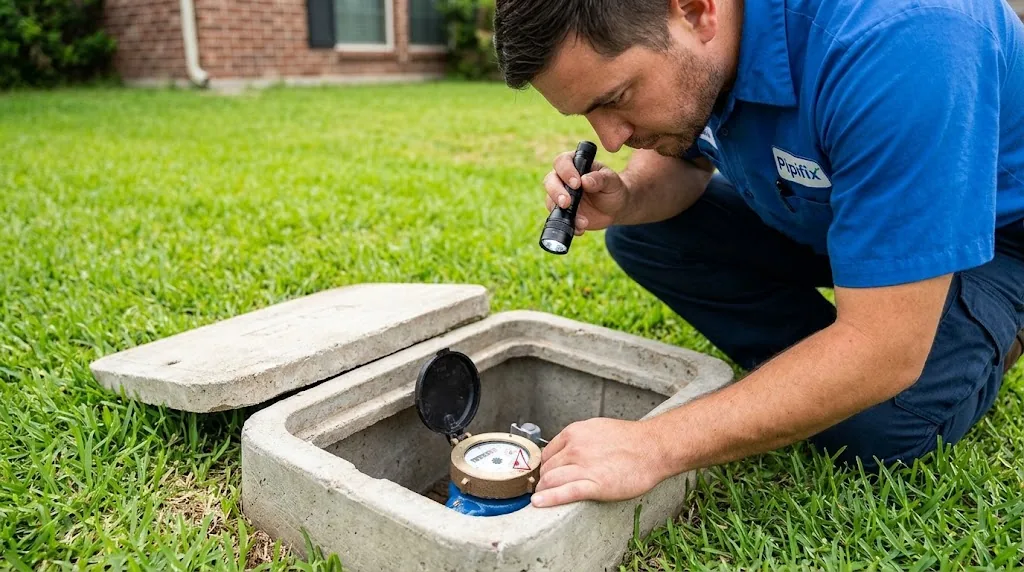
- Locate your water meter, usually in a ground-level box near the street or the edge of your property. Lift the lid carefully and watch for insects.
- Look for the low-flow indicator, often a small triangle or dial. If it is spinning, water is moving through the meter.
- Write down the meter reading, wait 30 minutes to 2 hours without using any water, then read it again.
- If the number changed, you have a leak somewhere between the meter and your fixtures.
Tip: take a photo of the meter before and after. If the reading changes, send the photos to your plumber. It saves time on the first visit.
5Check your toilets and fixtures
If the meter moves, check the likely causes in your home before you assume the worst.
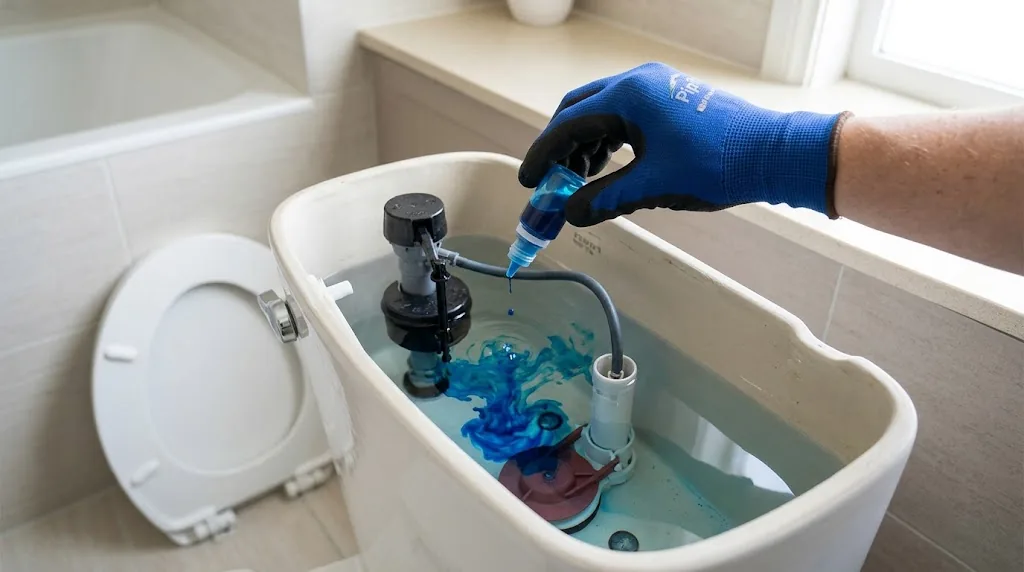
- Toilets: add a few drops of food coloring to the tank, wait 10 to 15 minutes without flushing, and look in the bowl. Color in the bowl means the flapper is leaking.
- Faucets and showerheads: look and listen for drips, and check under sinks for damp cabinets or wet pipes.
- Water heater: check the floor and the pipes around it for moisture. See our guide on water heater repair if the tank looks wet.
- Outdoor spigots and hoses: check connections and the soil near the house for soggy patches.
- Irrigation: turn the system off at its valve and test the meter again.
6Where hidden leaks usually are
| Where | What you may notice | Usually best move |
|---|---|---|
| Toilet flapper or fill valve | Dye in the bowl, toilet that refills on its own | Simple repair, often a quick fix |
| Dripping faucet or supply line | Visible drip, damp cabinet | Repair or replace the part |
| Irrigation line or valve | Soggy lawn patch, meter moves when the system is on | Locate and repair the line |
| Water heater connection | Moisture or rust at the base | Repair a fitting, or replace a leaking tank |
| Underground line between meter and house | Wet yard strip, drop in pressure | Leak detection, then repair |
| Pipe under the slab | Warm floor spot, sound of running water, damp flooring | Slab leak detection, then repair or reroute |
7What to do once you find a leak
Act quickly. If water is spreading inside your home, shut off the main water valve right away, then call a plumber. See emergency plumbing if the leak is active. If water has reached outlets or electrical equipment, stay away from them and do not touch anything electrical while standing in water.
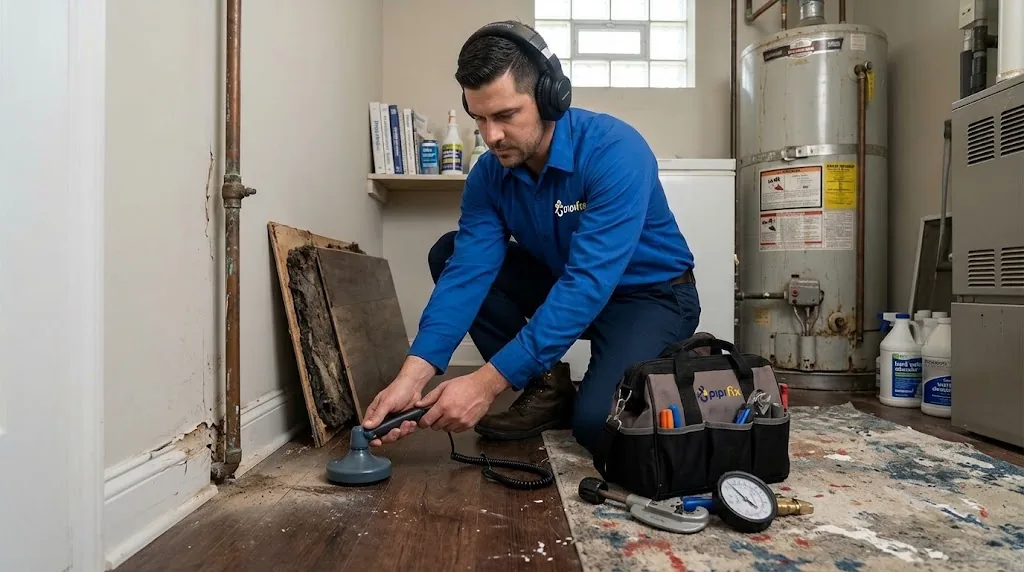
If the meter moves but you cannot find a visible leak, the problem is likely in a buried or concealed line. This is where professional leak detection pays off. A technician can pinpoint the leak with specialized equipment, so that only the damaged section is opened and repaired instead of tearing up a large area.
Ask for a written quote before work starts, and ask how the repair will be done. Also contact your water utility and your insurance company if the leak caused damage, since some bills and repairs may qualify for review or coverage.
8How to prevent the next one
- Read your meter once a month and write the number down. A quick habit that catches leaks early.
- Fix small drips and running toilets as soon as you notice them.
- Check under sinks and around the water heater every few months.
- Know where your main shut-off valve is, and test it once a year.
- Have your irrigation system checked at the start of each season.
- Consider a water softener if hard water is wearing on your fixtures and appliances.
Frequently asked questions
How do I know if I have a hidden water leak?
Turn off all water use and check your meter. If it keeps moving, or if your bill jumps without a change in habits, you probably have one.
How much can a small leak add to my water bill?
It depends on the leak size and your rates, but even a slow leak runs 24 hours a day and adds up over a billing cycle. A silent toilet leak is a common example.
Can I find a slab leak myself?
You can spot the signs, such as warm floor spots, running water sounds and a moving meter. Pinpointing the exact location usually needs professional slab leak detection equipment.
Does homeowners insurance cover a hidden leak?
Coverage varies by policy and by the cause and extent of the damage. Check your policy or ask your insurer before repairs begin, and keep photos and your plumber’s report.
Who should I call first, the water utility or a plumber?
Do the meter test first. If the meter moves with everything off, call a plumber. Your utility can also help explain your usage history and the readings.
Think you have a hidden leak?
Pipifix finds and repairs leaks across Victoria and nearby communities. Get a clear diagnosis and a written quote before any work starts.